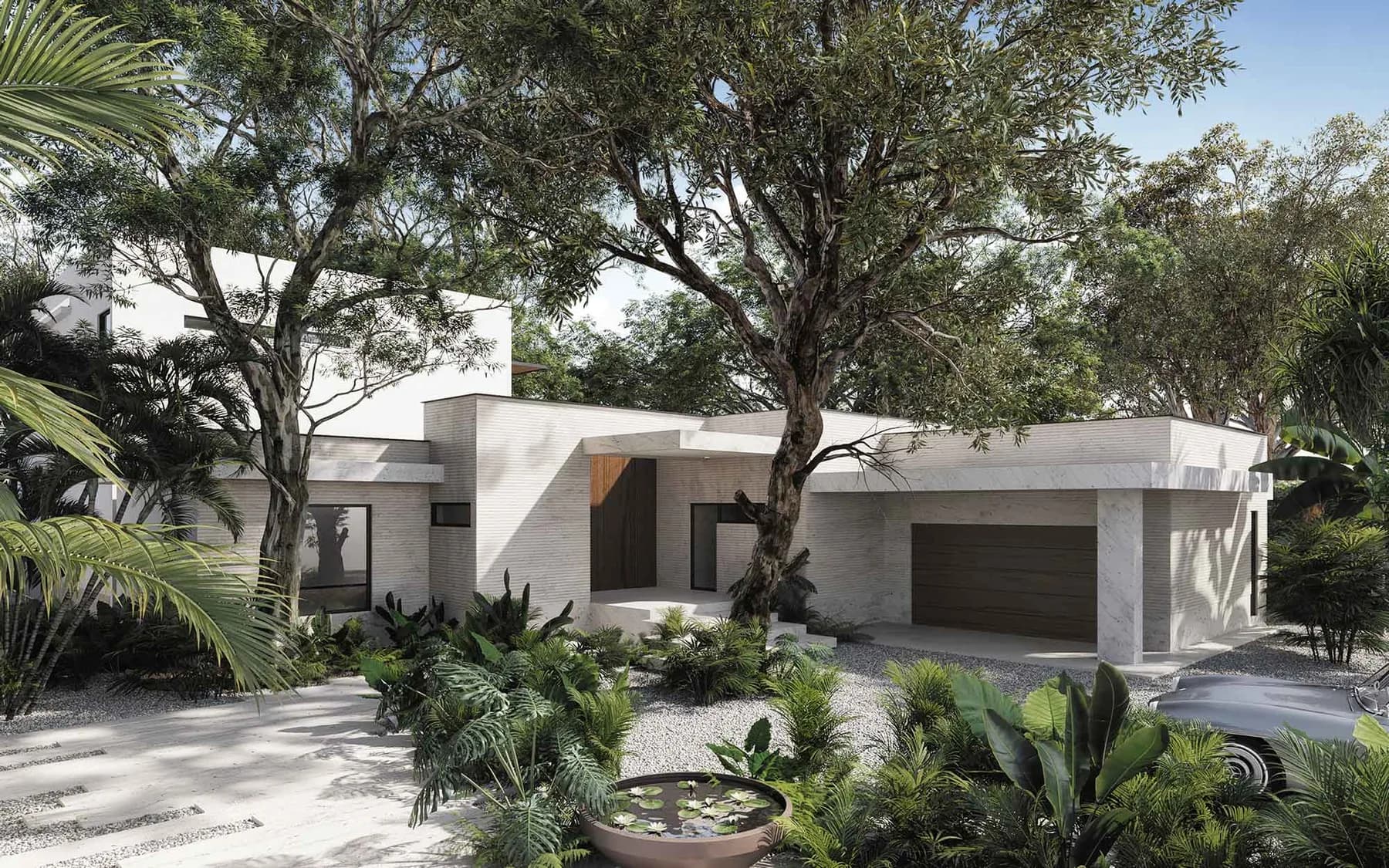
Limewash on brick: refinishing exteriors the quiet way
How limewash transforms a brick exterior into a soft, mineral finish that ages into character. The process, the durability, and the restraint that keeps it looking right.
Luxom Studio · LUXOM Developments
· 4 min read · Last reviewed
Key takeaways
- Limewash on brick is a slaked-lime finish that soaks into the masonry rather than coating it, giving an exterior a soft, matte, mineral surface with visible depth and movement.
- Unlike paint, limewash is breathable. It lets moisture pass through the brick instead of trapping it, which is why it does not blister or peel the way an acrylic film does.
- The finish is thinned and applied in washes, so color settles unevenly into the texture. That variation is the point: it reads as patina, not as a flat repaint.
- Limewash weathers gradually and can be refreshed with another coat rather than stripped. Expect to renew an exterior every several years depending on exposure.
- The quiet look comes from restraint: a muted mineral tone close to the brick, applied thin enough that the masonry still reads through the color.
Editor's note
Brick is one of the few exterior materials that already carries character before anyone touches it. The problem, on many houses, is not the brick itself but the color or the era it fixes the facade into. Limewash offers a way out that most repaints do not: it changes the tone without erasing the material underneath.
Done with restraint, a limewashed exterior reads as if it has always looked that way. The brick is still visibly brick. The color has simply settled into it, softened, and picked up the quiet, mineral quality that a flat coat of paint can never fake.
What limewash actually is
Limewash is one of the oldest exterior finishes in continuous use: slaked lime, water and natural pigment, thinned to a wash and brushed onto masonry. It is not a paint and does not behave like one. Rather than forming a film on the surface, it soaks into the porous brick and cures as the lime reacts with air, bonding into the material instead of sitting on top of it.
That chemistry is the entire reason to choose it. Because the finish becomes part of the wall, it keeps the texture, and because it is mineral and breathable, moisture passes through rather than being trapped behind a sealed skin. The interior version of the same material follows the same logic, covered in Limewash paint.
Why it suits brick specifically
Brick is porous and irregular, which is exactly what limewash needs. The wash settles unevenly into the face of each brick and into the mortar joints, so the color varies subtly across the wall. On a smooth substrate that variation can look like a mistake. On brick it looks like age, which is the effect worth having.
The finish also respects the masonry it covers. A limewashed wall still reads as brick, with its coursing and texture intact, rather than as a flat painted plane. You get the calming, unified tone without losing the material that gives the facade its weight.
Pull quote
The best limewash on brick looks like weather, not like a decision. You should have to look twice to see that anything was done.
The process, in short
A good limewash exterior starts with the substrate. The brick has to be sound, clean and free of previous sealers or acrylic paint, because limewash bonds only into a porous surface. Any prior film has to come off first, or the finish will chalk away.
From there the wash goes on thin, usually in two or more coats, dampening the wall so the lime draws in evenly. Because each coat is translucent, color builds gradually and stays soft, and the applicator can leave more or less of the brick reading through by adjusting dilution. It is a finish that rewards patience and a light hand, not thick coverage.
Durability and upkeep
Limewash is durable in the way old buildings are durable: it weathers slowly and gracefully instead of failing at an edge. Rather than blistering and peeling, it erodes evenly, softening over years. On a fully exposed facade, plan to refresh it every several years, less often on protected elevations.
Maintenance is additive. You recoat over the existing wash rather than stripping a failed film, so upkeep never means starting from raw brick again. That is a quieter, cheaper lifecycle than painted brick, which eventually has to be scraped and redone once the film gives way.
The quiet aesthetic, kept quiet
The reason to limewash brick is restraint, so the discipline is to not overreach. Stay within the brick's own tonal family, a few shades lighter or greyer, and apply the wash thin enough that the masonry still reads through the color. The moment the finish becomes opaque or high-contrast, it stops being limewash in spirit and starts being paint.
Handled this way, a limewashed exterior belongs to the house rather than announcing a renovation. To see how the same material thinking runs through our built work, the projects page is the place to look, and our services cover exterior finish selection end to end.
For how this same restraint plays out across a whole elevation rather than one material, facade-elevation-design covers the full facade language: white stucco, glass, an oak door and a canopy kept where it earned its place.
Pull quote
Limewash does not hide the brick. It settles into it, so the wall keeps its history and simply softens the tone.
Filed under
Questions about limewash brick
01What is limewash and how does it work on brick?
Limewash is a finish made from slaked lime, water and natural pigment, applied to masonry as a thin wash rather than a film. On brick it works by soaking into the porous surface and curing as it reacts with air, bonding to the masonry instead of sitting on top of it. That is the key difference from paint. A limewashed wall keeps the texture and irregularity of the brick, with color settling unevenly into the surface so it reads as depth rather than a flat coat. Because it is mineral and breathable, moisture moves through it, which is why it does not trap water behind a skin the way acrylic paint can. The result is a soft, matte, slightly cloudy finish that looks aged from the first day. For the interior version of the same material, see Limewash paint.
02Is limewash durable on an exterior brick facade?
Yes, with the right expectations. Limewash is a mineral finish that cures hard and bonds to masonry, and traditional lime finishes have protected buildings for centuries. It is durable, but it weathers differently from paint. Instead of failing at an edge and peeling, limewash erodes slowly and evenly, softening rather than flaking. On a fully exposed facade you can expect to refresh it every several years, longer on protected elevations. Renewal is simple because you recoat over the existing wash instead of stripping a failed film, so maintenance is additive rather than destructive. Durability also depends on preparation: the brick must be sound, clean and free of previous sealers or acrylic paint, since limewash needs a porous surface to bond into. Done correctly on bare or lime-compatible masonry, it is a finish that improves with time rather than fighting it.
03How is limewash different from painting brick?
Paint forms a continuous film on the surface of the brick. Limewash penetrates and becomes part of it. That single difference drives everything else. Painted brick reads as a solid, uniform color and hides the masonry underneath, and because the film is sealed, trapped moisture can eventually push it off in sheets, which is why painted brick so often looks tired within a decade. Limewash keeps the texture and tonal variation of the brick visible, breathes so moisture escapes, and ages by softening rather than peeling. There is also a point of no return with paint: once brick is painted it usually has to stay painted. Limewash is more forgiving and, crucially, reversible in its early life since a fresh, unbonded coat can be washed back. For a restrained exterior, limewash gives you color without erasing the material. Our projects show the approach applied in built work.
04What colors work best for limewashed brick?
The quietest results come from staying close to the brick's own family. A limewash a few tones lighter or greyer than the underlying masonry lets the brick read through the color, which is what gives the finish its depth and keeps it from looking like flat paint. Soft whites, warm bones, pale greys and muted earth tones all sit comfortably on brick. High-contrast or highly saturated colors fight the material and lose the mineral, weathered quality that makes limewash worth using in the first place. Because the wash is translucent and settles unevenly, the final color is always softer and more variable than the sample suggests, so it is worth testing on a section of the actual wall in real light before committing. Restraint is the whole discipline here: choose a tone that calms the facade rather than announcing a color change.
05Can limewash be applied over previously painted brick?
Not directly, and this is the most common reason a limewash job fails. Limewash needs to bond into porous masonry, and a previously painted or sealed brick surface gives it nothing to grip, so it will not cure or adhere properly and will eventually chalk off. If the brick has been painted with an acrylic or latex, that film has to be removed first, or a different finish has to be chosen. Bare, sound, unsealed brick is the ideal substrate. Some manufacturers offer mineral or silicate coatings formulated to work over sound existing paint, but those are a different product from true breathable limewash and should be specified deliberately rather than assumed. Before any exterior refinish, the surface has to be assessed honestly. If you are weighing options for a Miami facade, our services cover exterior finish selection as part of the wider design work.
Explore the portfolio
Projects to see


Talk to the studio
If this belongs in your home, our studio will draw the plan.
Initial conversation, 30 minutes. We listen to the brief and respond with a scoped proposal within five working days. You can also read the services page for typical timelines and fees.
Written by Luxom Studio · LUXOM Developments
The design and development studio behind LUXOM residences in Coconut Grove, Miami
Keep reading
From the journal
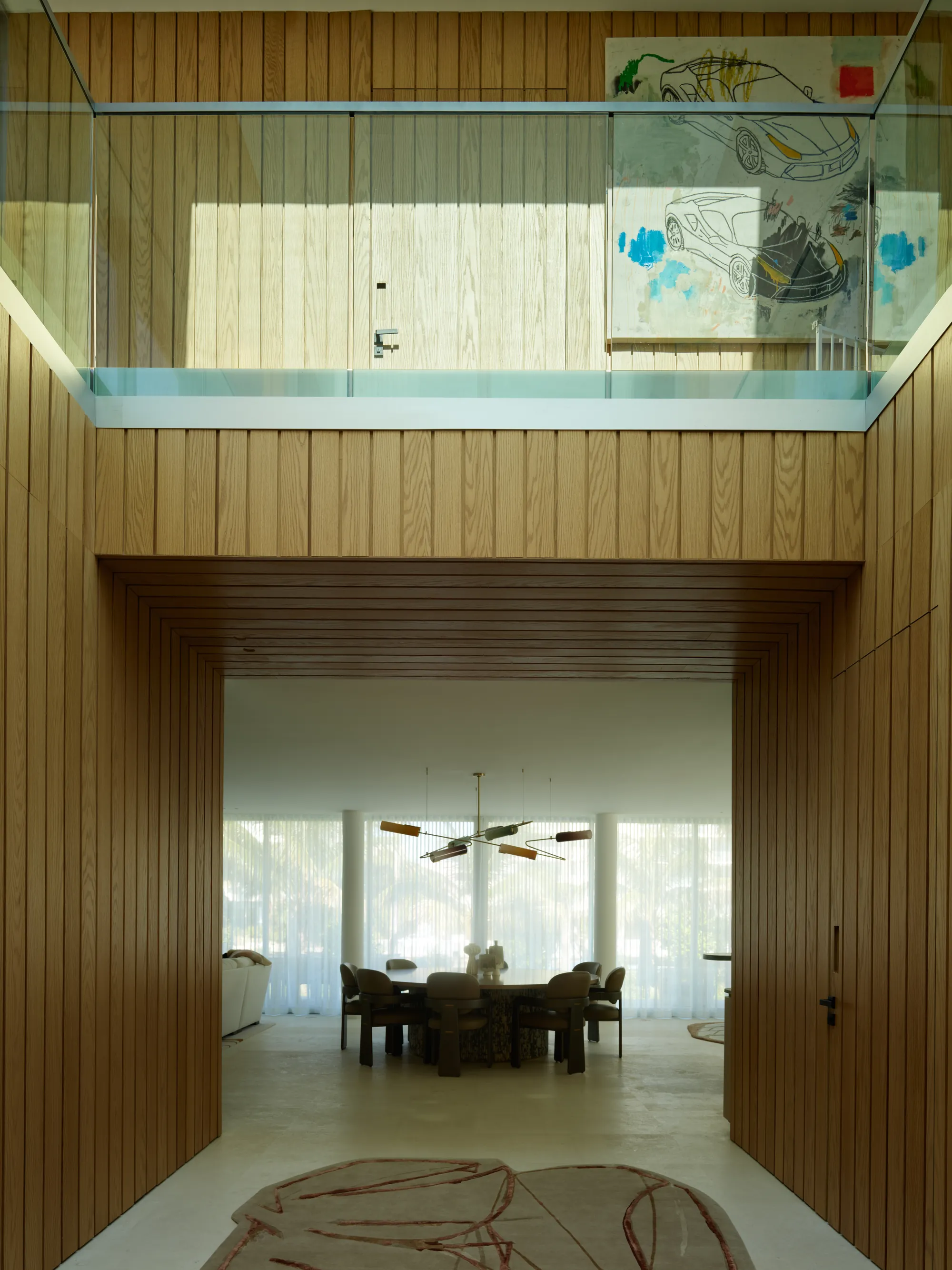
Materials · Sep 13, 2026 · 4 min
Five Walls That Aren't Painted
Plaster, cement, wood and stone, four crafted finishes we specify instead of a coat of color, and the one rule that decides which wall gets which one.
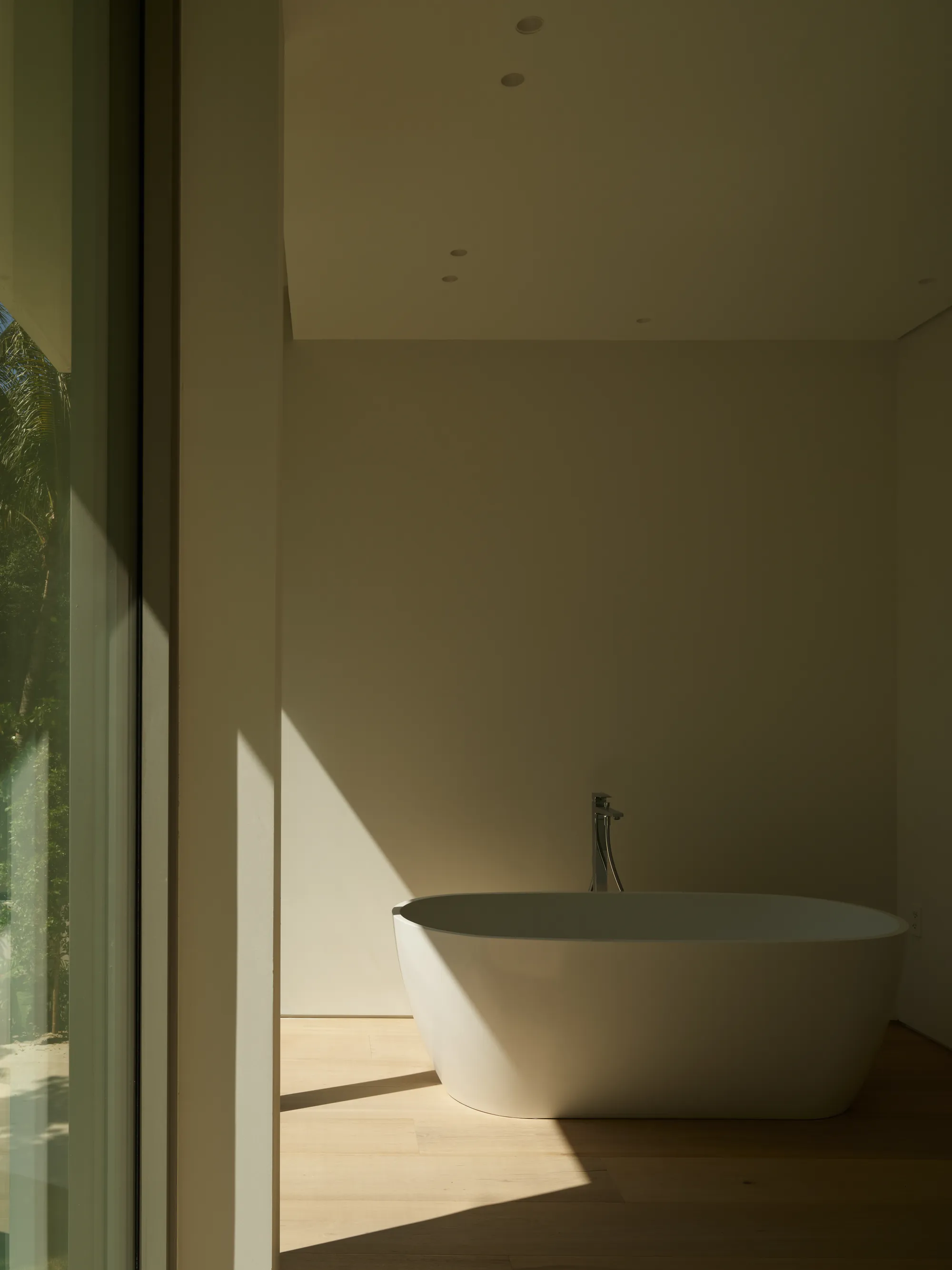
Materials · Sep 13, 2026 · 4 min
The Tub Decides the Bathroom: A Buyer's Guide
The tub is the one fixture that has to be chosen before anything else in the room. A working comparison of freestanding, built-in, stone-carved and soaking tubs, and what each one decides for the space around it.
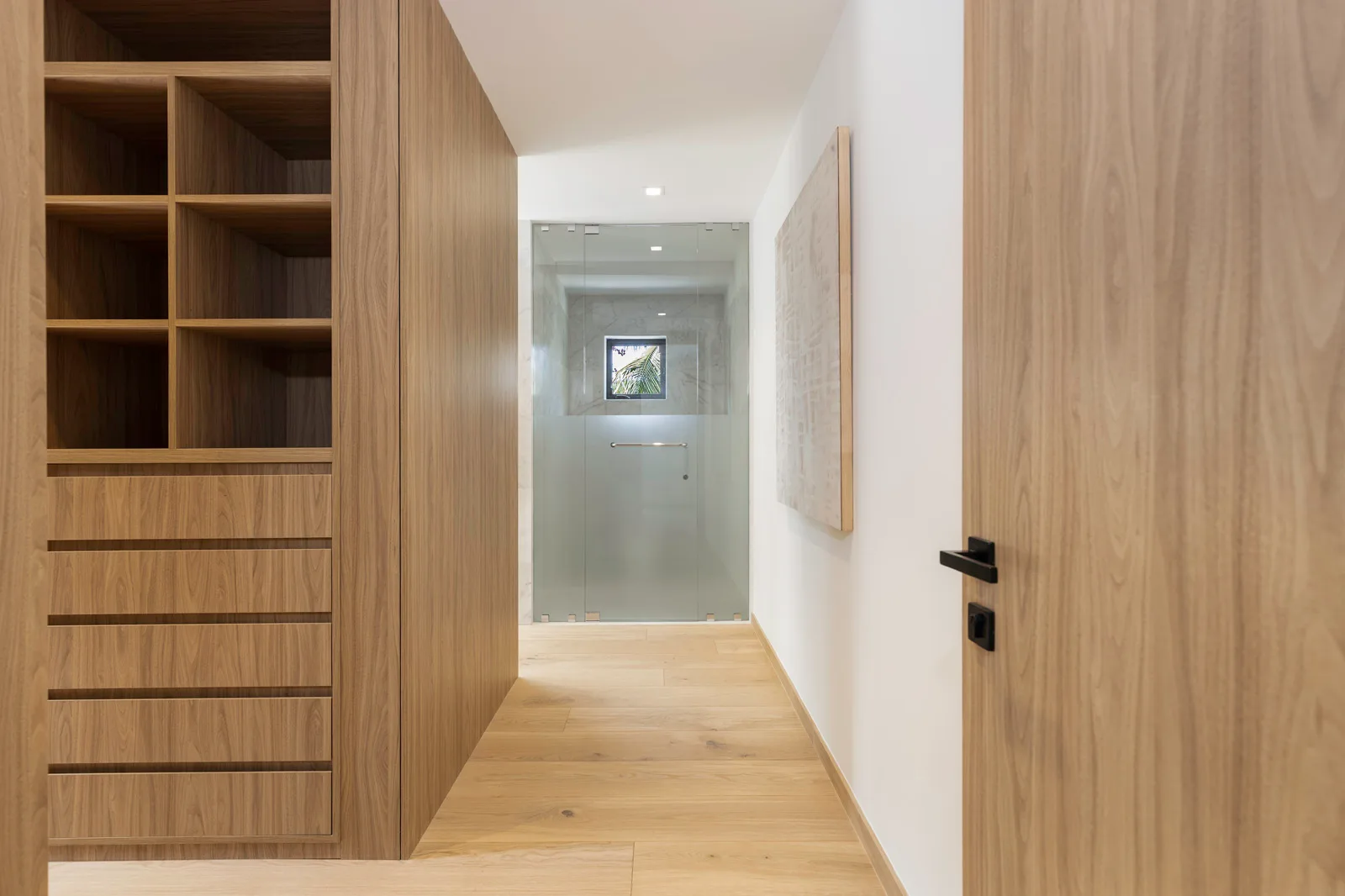
Materials · Sep 1, 2026 · 5 min
One Timber, Fourteen Rooms: White Oak and Walnut Joinery
Why timber is the one finish that improves with use, and how a single white oak and walnut joinery program runs through closets, panelling, doors and ceilings in one Luxom home.