Five Walls That Aren't Painted
Plaster, cement, wood and stone, four crafted finishes we specify instead of a coat of color, and the one rule that decides which wall gets which one.
Luxom Studio · LUXOM Developments
· 4 min read · Last reviewed
Key takeaways
- Five wall finishes we specify at Luxom are not paint: Venetian plaster, limewash, microcement, fluted wood panelling and book-matched marble. Each is a made surface, not a coat of color.
- The finishes split by hand versus machine and by wet versus dry: plaster and limewash are lime-based and applied by trowel or brush, microcement is a cementitious skin built for water, wood and marble are cut and set rather than coated.
- The rule for choosing between them is craft and substrate, not shade. A feature wall wants depth or texture; a bathroom wants a seamless, sealed surface; a hallway wants rhythm.
- None of them hide a bad wall. Plaster, cement and book-matched marble all reveal an uneven substrate, so the wall underneath has to be planned before the finish is chosen.
- A considered interior mixes two or three of these rather than picking one finish for the whole house, plaster on a feature wall, microcement in a wet room, marble book-matched in a bath.
Editor's note
Paint is the finish everyone defaults to because it is the easiest decision to make last. These five are not that. Each one has to be decided with the floor plan, the substrate and the wet zones, not picked off a swatch after the walls are already up. None of them are a coat of color. All five are surfaces that are built, troweled, cut or mirrored, and each earns its place for a different reason.
VENETIAN PLASTER, THE WALL THAT BECOMES ONE
Venetian plaster is a lime-based finish, descended from the polished stucco of Renaissance Venice, troweled onto a wall in thin layers and burnished until it holds its own soft light. It is a craft finish built by hand, not a product rolled on, and the depth depends entirely on the applicator's technique. It belongs on feature walls, entry halls, stairwells, ceilings and niches, the surfaces the eye lingers on, and it can suit a powder room away from direct water once sealed. What it will not do is hide a rough wall underneath, since it reveals the substrate rather than covering it. The full breakdown, including how it compares to limewash and microcement, is in Venetian plaster: hand-applied surfaces.
LIMEWASH, COLOR THAT MOVES WITH THE LIGHT
Limewash is a mineral paint made from slaked lime and water that soaks into a porous surface instead of filming over it, which is why it reads as soft, cloudy depth rather than a flat coat. It shifts slightly across a wall and through the day, breathes on plaster and masonry, and ages by weathering into character instead of chipping. It is the most forgiving of the five on an imperfect wall, and the one best suited to covering a whole room or an exterior facade rather than a single feature. We use it across interiors and on brick exteriors alike, covered in limewash: the finish behind the quiet-luxury wall and limewash on brick.
MICROCEMENT, THE SEAMLESS SKIN FOR WET ROOMS
Microcement is a thin Portland cement based coating, a few millimeters thick, applied in layers to create a seamless, jointless surface with no grout line to fail. That makes it the wall finish on this list actually engineered for wet zones, showers and high-traffic bathrooms, where plaster and wood are not the right tool. It needs a sealer to resist water and staining, and the sealer is the maintenance: reseal on schedule and it lasts. Against tile, it removes the grout noise entirely, but it has to be installed by a specialist because the finish is the substrate, with nothing to hide behind. Details on wear and comparison to plaster and tile are in microcement: a guide to seamless surfaces.
FLUTED WOOD PANELS, TEXTURE INSTEAD OF COLOR
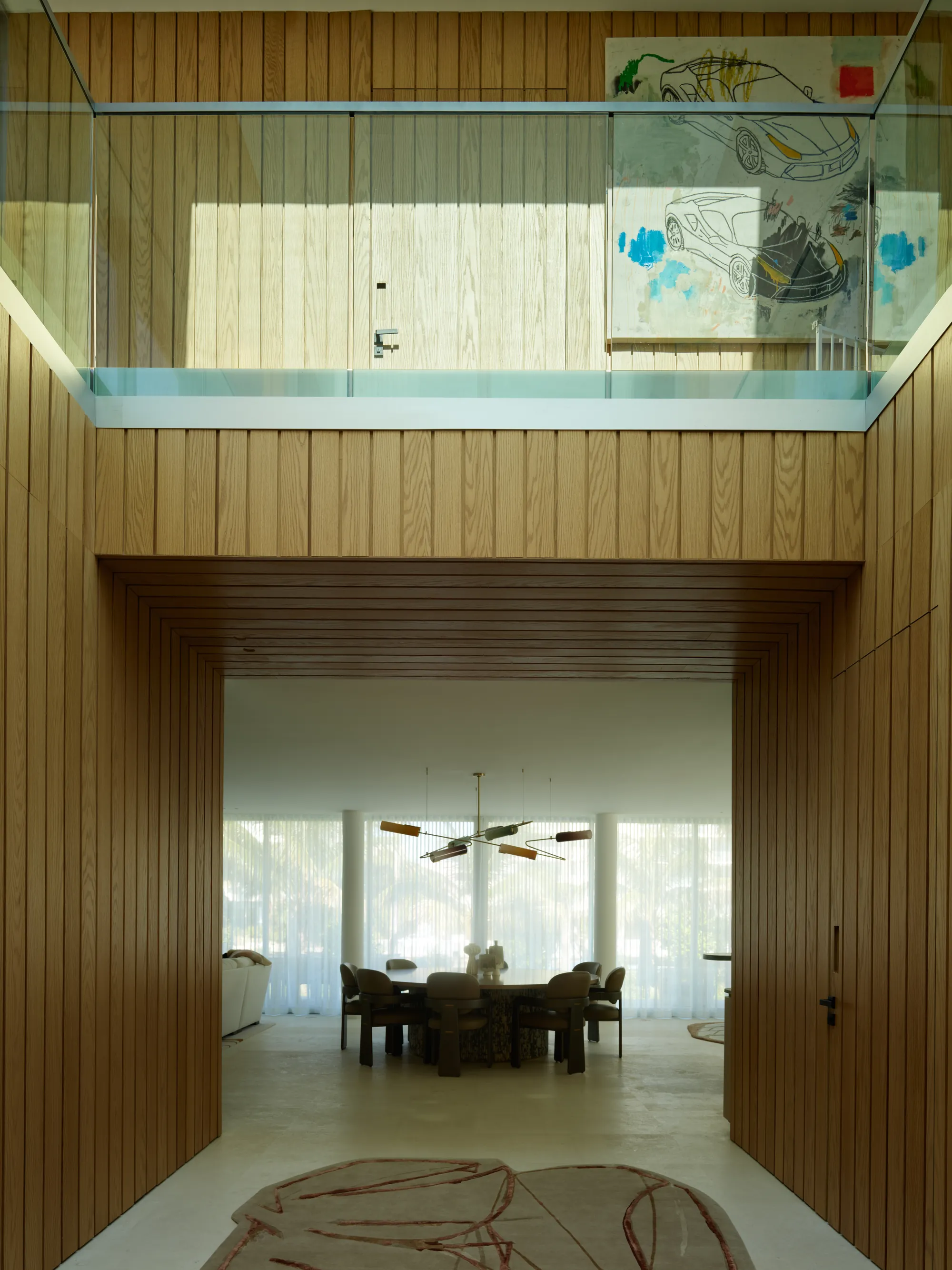
Fluted wood panels are machined with parallel vertical ribs that catch light and shadow, turning a flat plane into an architectural detail without introducing color or pattern. The effect is tonal, not decorative, so it adds depth to a quiet room without competing with it. Species and finish set the mood: white oak reads calm and contemporary, walnut reads warm, and a matte oiled finish suits the texture better than gloss. It belongs on a feature wall, an island front, joinery or a headboard, never on every surface in a room. See fluted wood: texture as architectural detail for orientation and species notes.
BOOK-MATCHED MARBLE, THE SEAM PLANNED FIRST
Book-matched marble mirrors two slabs cut from the same block so the veining reads as one continuous pattern across a wall, most often a bathroom shower or a feature surface behind a tub. The catch is that the joint only forgives a wall drawn around it first: the mirror, the window and the slab layout all have to be planned together, before a single piece is cut, or the pattern breaks. It is the most planning-heavy finish on this list and the one with the least room for a change of mind mid-build. We walk through how that sequencing runs across our Coconut Grove bathrooms in book-matched marble at Luxom.
WHICH WALL GETS WHICH FINISH
The rule across all five is the same: choose by job, not by shade. A feature wall that should carry the room wants Venetian plaster or fluted wood, depending on whether the effect should be sheen or texture. A whole room that wants quiet color without a repaint schedule wants limewash. A shower or a heavily used bathroom wants microcement or book-matched marble, depending on whether the priority is a seamless skin or a sculptural pattern. A single finish rarely does the whole job. A considered interior mixes two or three, each where it belongs, which is the same discipline behind the broader palette in quiet luxury and the material choices across Trends 2026. If you are mapping which finish goes where in your own home, that is exactly the conversation our interior design service is built for, and the contact page is open when you are ready to start it.
Pull quote
Paint is a decision you make last. These five are decisions you make with the floor plan.
Filed under
Questions about wall finishes that aren't paint
01What wall finishes are there besides paint?
The finishes we return to most are Venetian plaster, limewash, microcement, fluted wood panelling and book-matched marble. Each does a different job: plaster and limewash are lime-based finishes applied by hand for depth or soft color, microcement is a thin cementitious skin built for seamless, water-ready surfaces, fluted wood adds architectural texture through shadow, and book-matched marble uses the stone's own veining as a mirrored pattern. None of them are a coat of color over a flat wall; all five are surfaces that are built or cut, not painted. We break the first three down on their own in Venetian plaster, limewash and microcement.
02What is the difference between Venetian plaster, limewash and microcement?
All three are lime- or cement-based, and all three get confused for one another, but they behave nothing alike. Venetian plaster is troweled on thick in layers and burnished, so it becomes the wall as sculpted, reflective depth. Limewash is a thin mineral paint brushed on, so it sits as soft, cloudy color while the wall stays flat and chalky. Microcement is a thin cementitious coating engineered for seamless, durable coverage across walls and floors, including wet zones where the other two struggle. In short: plaster for a jewel surface, limewash for quiet color across a whole room, microcement where the surface has to be seamless and take real use. The full comparison is in Venetian plaster: hand-applied surfaces, which sets the three against each other directly.
03Which of these wall finishes works in a bathroom?
Microcement and book-matched marble are the two built for wet rooms. Microcement, correctly sealed, creates a seamless, jointless surface across a shower or full bath with no grout line to fail, which is why it shows up in our seamless bathroom work, detailed in microcement. Book-matched marble slabs, mirrored from the same block so the veining reads as one continuous pattern, take a bathroom wall from tiled to sculptural, and the layout has to be planned around the mirror and window before a single slab is cut, which we walk through in book-matched marble.
04Where should fluted wood panelling be used instead of a flat wall?
Fluted wood belongs on features, not on every wall. A feature wall, a kitchen island front, joinery fronts, a reception desk or a headboard are where the vertical ribs catch raking light and add rhythm without adding color or pattern. White oak reads calm and contemporary, walnut reads warmer, and a matte oiled finish suits the texture better than gloss. Used on every surface in a room it stops reading as a detail and starts reading as wallpaper, which defeats the point, the same job-first logic covered in which wall gets which finish. We cover species and orientation in fluted wood panels.
05Do any of these finishes hide an imperfect wall?
No, and that is the tradeoff for the depth they give. Venetian plaster, microcement and book-matched marble all reveal rather than hide the substrate underneath, so the wall has to be smooth, sound and correctly prepared before the finish goes on. Limewash is more forgiving since it settles into texture rather than sitting flat, and fluted wood panelling can bridge minor irregularity because the panels themselves set the plane. That is why we plan the finish at the same stage as the wall itself rather than picking it afterward, the same discipline described in quiet luxury and in a fireplace is not a hole.
Explore the portfolio
Projects to see


Talk to the studio
If this belongs in your home, our studio will draw the plan.
Initial conversation, 30 minutes. We listen to the brief and respond with a scoped proposal within five working days. You can also read the services page for typical timelines and fees.
Written by Luxom Studio · LUXOM Developments
The design and development studio behind LUXOM residences in Coconut Grove, Miami
Keep reading
From the journal
Materials · Sep 13, 2026 · 4 min
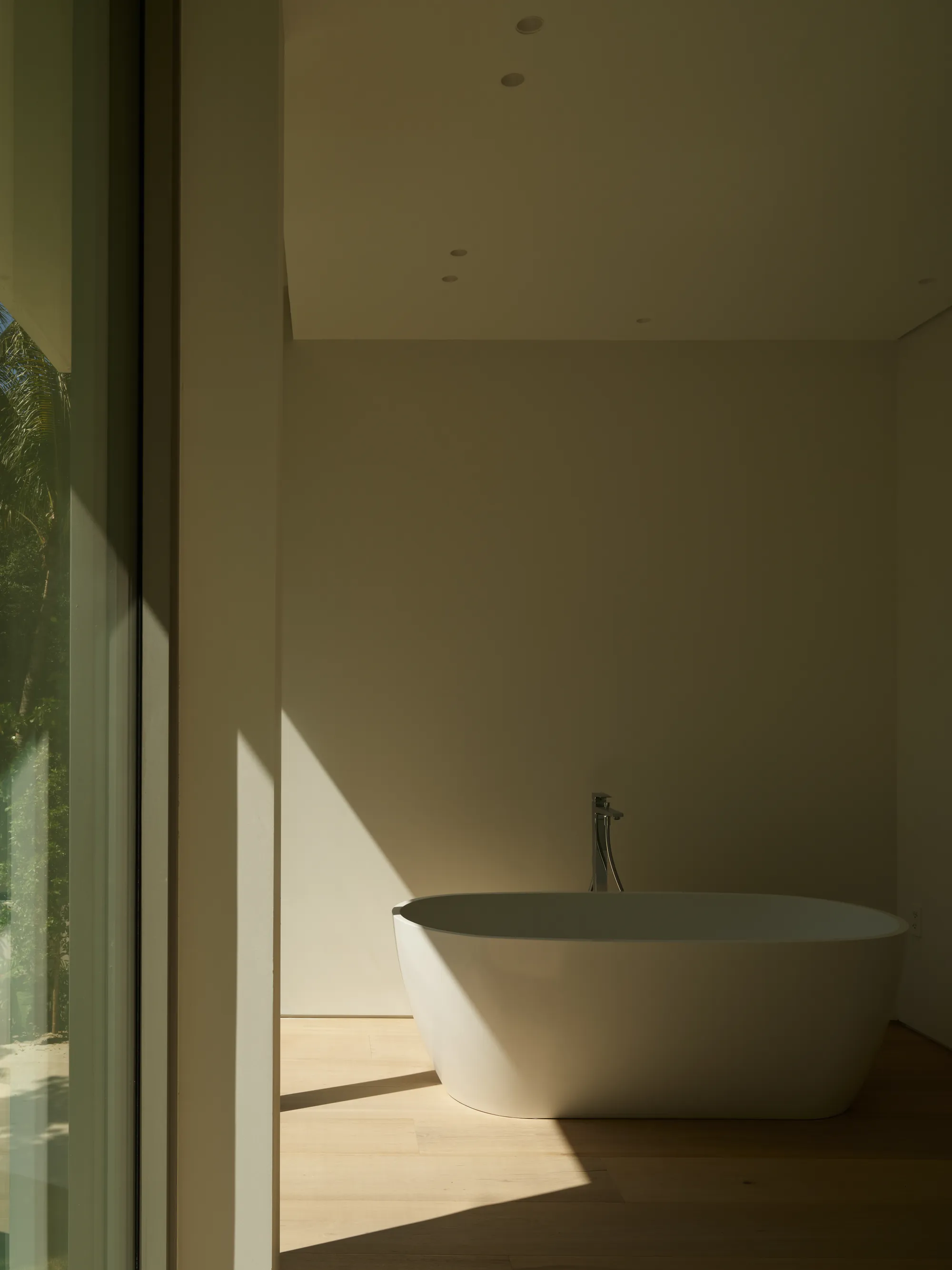
The Tub Decides the Bathroom: A Buyer's Guide
The tub is the one fixture that has to be chosen before anything else in the room. A working comparison of freestanding, built-in, stone-carved and soaking tubs, and what each one decides for the space around it.
Materials · Sep 1, 2026 · 5 min
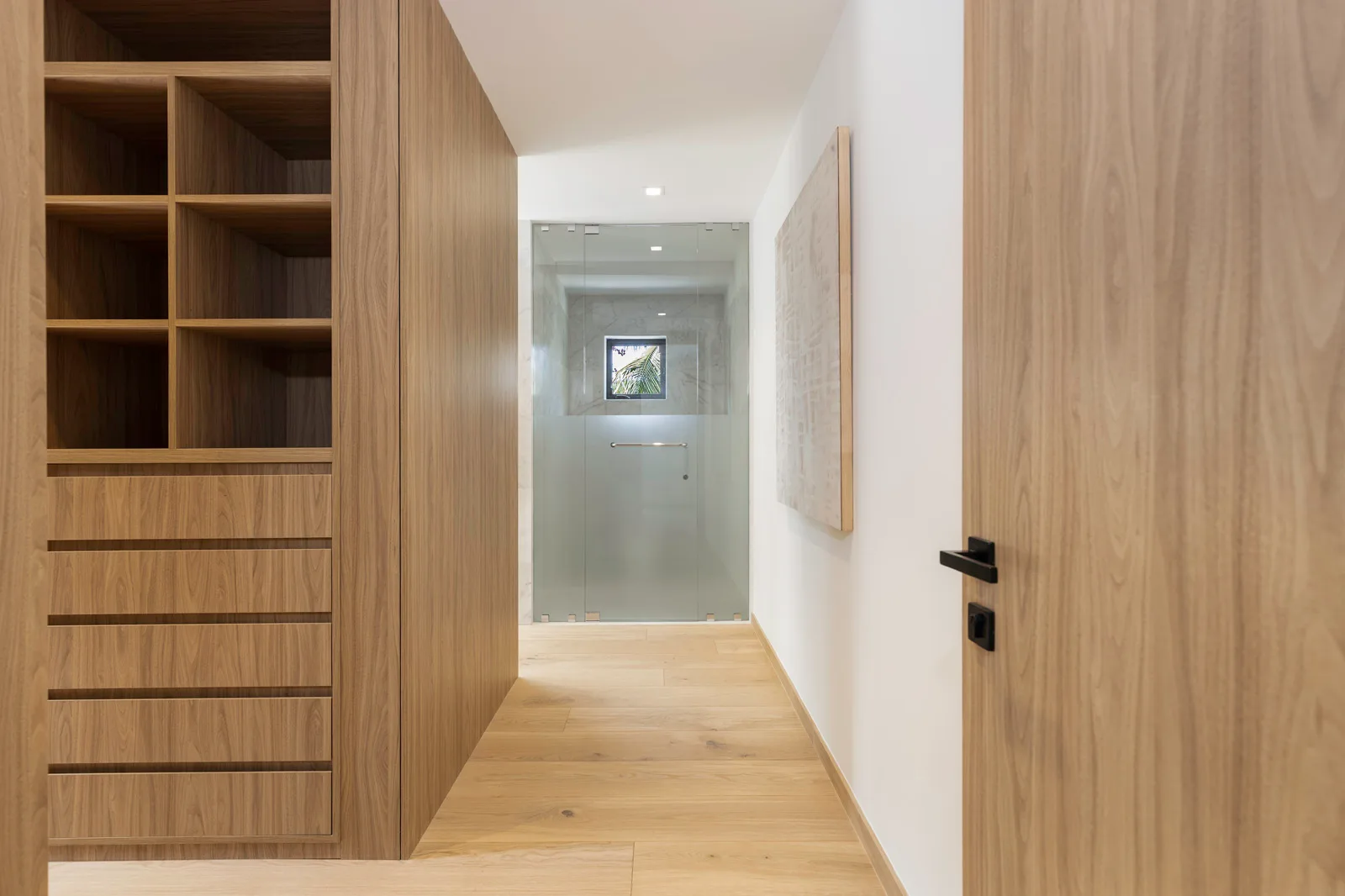
One Timber, Fourteen Rooms: White Oak and Walnut Joinery
Why timber is the one finish that improves with use, and how a single white oak and walnut joinery program runs through closets, panelling, doors and ceilings in one Luxom home.
Materials · Sep 1, 2026 · 8 min
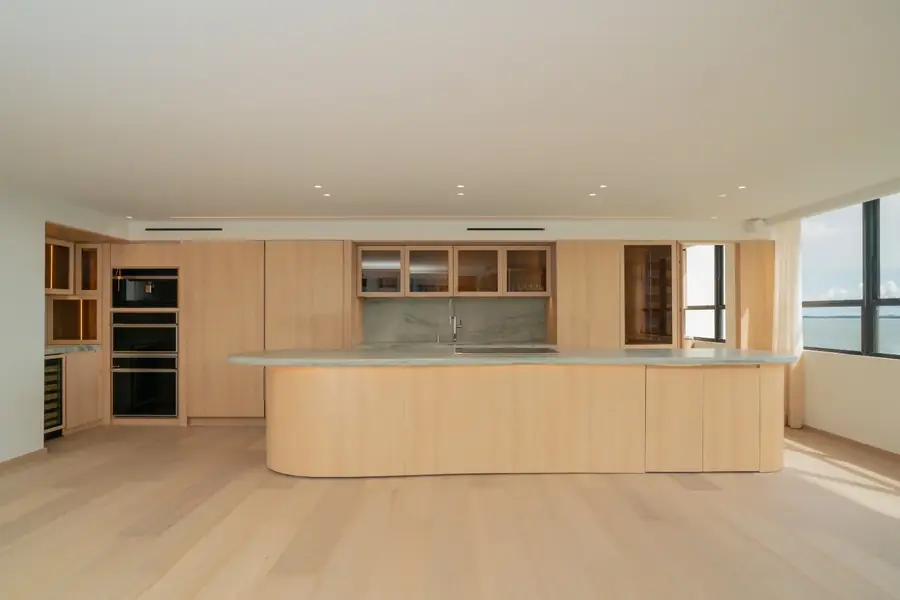
What Kitchen Precision Actually Signals About the Rest of the House
The kitchen is the easiest room in a house to fake and the hardest one to fake well. Here is what aligned hardware, matched stone and silent doors actually tell you about the rest of a Luxom build.