Venetian plaster: hand-applied surfaces
The troweled lime finish that turns a wall into depth and sheen. What Venetian plaster is, how it is applied, where it belongs, and how it compares to microcement and limewash.
Luxom Studio · LUXOM Developments
· 4 min read · Last reviewed
Key takeaways
- Venetian plaster is a lime-based finish troweled onto a wall in thin layers and burnished smooth, creating depth and a soft marble-like sheen that a flat paint cannot reproduce.
- It is a craft finish, built up by hand in multiple coats and polished with a steel trowel. The movement and depth depend entirely on the applicator's technique, not the product.
- Venetian plaster belongs on feature walls, ceilings, niches and low-splash areas where you want sculpted depth. Sealed lime plaster can also suit bathrooms away from direct water.
- Compared with limewash, Venetian plaster becomes the wall as burnished depth, while limewash sits on it as soft color. Venetian plaster is thicker, smoother and more reflective.
- Compared with microcement, Venetian plaster is a lime finish prized for depth and sheen, while microcement is a harder cementitious skin built for seamless, high-traffic walls and floors.
Editor's note
Some walls are painted. A few are made. Venetian plaster belongs to the second kind: a lime finish troweled on by hand in thin layers and burnished until the surface holds its own soft light, closer to polished stone than to a coat of color. It is one of the oldest wall techniques still in serious use, and one of the most quietly luxurious.
It is also frequently confused with everything around it, lumped in with limewash, microcement and ordinary textured paint. Those are different materials doing different jobs. This is what Venetian plaster actually is, how it goes on, where it earns its place, and how to tell it apart from its neighbors.
A finish that becomes the wall
Venetian plaster descends from the polished stucco of Renaissance Venice, and the lineage explains its character. Traditionally it is slaked lime blended with finely ground marble dust, troweled onto the wall in thin coats and burnished smooth. The marble content and the burnishing are what give it depth: light seems to enter the surface and move within it, producing the soft, marble-like sheen that no flat paint can imitate.
The distinction from paint is fundamental. Paint is a film that colors a wall. Venetian plaster is a built surface that becomes one. Run your hand across it and you feel a cool, dense, polished plane rather than a coat. That made quality is exactly why it reads as luxury in the restrained, material-led interiors we favor, the same discipline described in quiet luxury.
The hand is the finish
Venetian plaster cannot be rolled on. It is built up in several thin layers with a steel trowel, each coat spread in short overlapping strokes, allowed to set, then followed by the next. The depth and movement accumulate through those passes. The final step is burnishing, working the trowel back over the surface under pressure to compress and polish it into its signature sheen, sometimes finished with a protective wax or sealer.
Because every stage depends on technique, the same material produces very different walls in different hands. This is a craft finish, not a product, and the applicator matters more than the bucket. It also demands a smooth, sound substrate, since the plaster reveals rather than hides what is underneath. We specify and supervise this work directly, which is visible in the surfaces across our projects.
Where it belongs
Venetian plaster is a finish to place deliberately, on the surfaces that deserve to carry a room. Feature walls, entry halls and stairwells, ceilings, niches and fireplace surrounds, anywhere the light rakes and the eye lingers. Polished and sealed, it can work in powder rooms and bathrooms away from direct water, and on ceilings it gives a soft luminosity overhead that rewards the effort.
What it is not is a whole-house default or a high-abuse surface. Shower interiors and hard-worn zones ask for something tougher and more water-tolerant, and because the plaster shows the substrate, it needs a stable, smooth wall beneath it. Used with that judgment, as a jewel rather than a blanket, it delivers depth nothing else can. Where a surface needs to be seamless and hard-wearing instead, microcement is usually the better answer.
Placed against limewash and microcement
The three finishes get grouped together and behave nothing alike. Venetian plaster is thick, troweled and burnished, so it becomes the wall as sculpted, reflective depth. Limewash is a thin mineral paint brushed on, sitting as soft cloudy color while leaving the wall flat and chalky. Microcement is a thin cementitious skin engineered for seamless durability across walls and floors, including wet and high-traffic zones. Sheen and depth, matte movement, seamless performance: three different jobs.
A considered home often uses all three, each where it belongs, rather than forcing one to do everything. Venetian plaster where a surface should feel like a made object. Limewash where a room wants quiet calm across whole walls. Microcement where the surface has to be seamless and take real use. If you want help mapping which finish goes where in your own home, that is exactly the conversation our interior design service is built for, and you can start it through the contact page.
The same discipline extends past the wall itself. See a fireplace is not a hole for how the surround material gets decided at the same stage as the firebox and the floor plan around it, rather than picked afterward as a finishing touch.
For how Venetian plaster stacks up against microcement, fluted wood and book-matched marble in one place, see five walls that aren't painted.
Pull quote
Paint colors a wall. Venetian plaster becomes one, layer by layer, until the surface holds its own light.
Filed under
Questions about venetian plaster
01What is Venetian plaster?
Venetian plaster is a lime-based wall finish, descended from the polished stucco of Renaissance Venice, that is troweled onto a surface in thin layers and burnished to a smooth, subtly reflective depth. Its defining quality is the way light seems to sink into and bounce within the surface, giving a soft, marble-like movement that flat paint can never reproduce. Traditional versions are made from slaked lime and finely ground marble dust, which is where the depth and low sheen come from. It reads as a genuinely made surface rather than a coat of color, which is why it has become a signature of material-led, quiet interiors. It can be left matte or polished to a higher gloss depending on the room. For the broader palette it belongs to, see quiet luxury, and for a lighter mineral alternative, limewash.
02How is Venetian plaster applied?
Venetian plaster is built up by hand in several thin coats with a steel trowel, and the technique is the finish. The applicator spreads each layer in short, overlapping strokes, lets it set, then applies the next, gradually developing the depth and movement. The final passes are burnished, the trowel worked back over the surface under pressure to compress and polish it into its characteristic sheen. A sealer or wax may follow to protect it and, in wet areas, to add water resistance. Because everything depends on the hand, two crews will produce visibly different walls from the same material, which is why it is a craft finish rather than a product you simply roll on. The wall must be sound, smooth and correctly primed first, since Venetian plaster reveals rather than hides an uneven substrate. We specify and supervise this work directly, as you can see across our projects.
03Where should Venetian plaster be used?
Venetian plaster is at its best where you want a wall to carry the room: feature walls, entry halls, stairwells, ceilings, niches and fireplace surrounds. Its depth rewards places the eye lingers and light rakes across. Polished and sealed, it can also work in bathrooms and powder rooms away from direct water contact, and it is used on some ceilings for a soft, luminous effect overhead. It is less suited to high-abuse zones and direct wet areas like shower interiors unless heavily sealed, and because it shows the substrate, it needs a smooth, stable wall underneath. Think of it as a finish you place deliberately, on the surfaces that deserve the attention, rather than something you spread through every room. For seamless surfaces that handle heavier use and wet zones, microcement is often the better tool. Our interior design service plans which finish goes where.
04How does Venetian plaster compare to limewash?
They are both lime finishes, but they do different things. Venetian plaster is troweled on thick in layers and burnished smooth, so it becomes the wall as sculpted, reflective depth, cool and polished to the touch. Limewash is a thin mineral paint brushed on, so it sits on the wall as soft, cloudy color while leaving the surface flat and chalky. Venetian plaster has sheen and dimensionality; limewash has matte, weathered movement. Venetian plaster is the more labor-intensive and formal of the two, suited to feature surfaces you want to feel crafted. Limewash is looser and more rustic, easy to refresh with another coat, and beautiful across whole rooms and exteriors. Many homes use both, Venetian plaster where they want a jewel, limewash where they want calm. We compare the full family in limewash, and both sit in the palette from Trends 2026.
05Venetian plaster or microcement: which should I choose?
Choose by job. Venetian plaster is a lime finish prized for depth, sheen and craft, best on feature walls, ceilings and low-traffic surfaces where you want a made, luminous look. Microcement is a thin cementitious coating built for performance: applied seamlessly over almost any substrate, including floors, it creates a continuous, harder-wearing skin that suits high-traffic areas and wet zones better than lime plaster does. In short, reach for Venetian plaster when the surface is about beauty and depth, and reach for microcement when it needs to be seamless, durable and used hard, such as a bathroom floor or a kitchen wall. They are not rivals so much as different tools, and a considered home often uses each where it belongs. We break microcement down on its own in microcement, and our contact page is open if you want help deciding.
Explore the portfolio
Projects to see


Talk to the studio
If this belongs in your home, our studio will draw the plan.
Initial conversation, 30 minutes. We listen to the brief and respond with a scoped proposal within five working days. You can also read the services page for typical timelines and fees.
Written by Luxom Studio · LUXOM Developments
The design and development studio behind LUXOM residences in Coconut Grove, Miami
Keep reading
From the journal
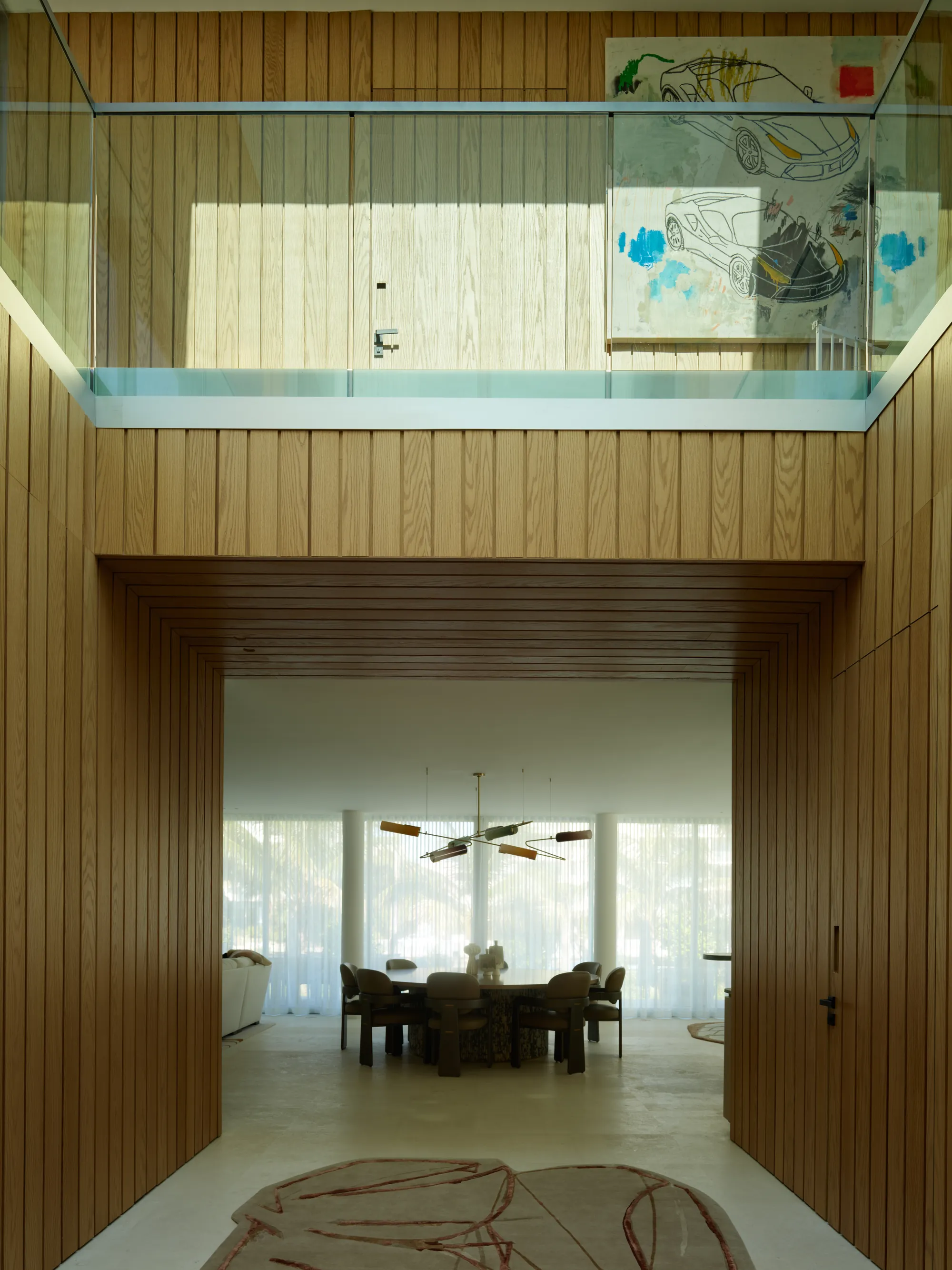
Materials · Sep 13, 2026 · 4 min
Five Walls That Aren't Painted
Plaster, cement, wood and stone, four crafted finishes we specify instead of a coat of color, and the one rule that decides which wall gets which one.
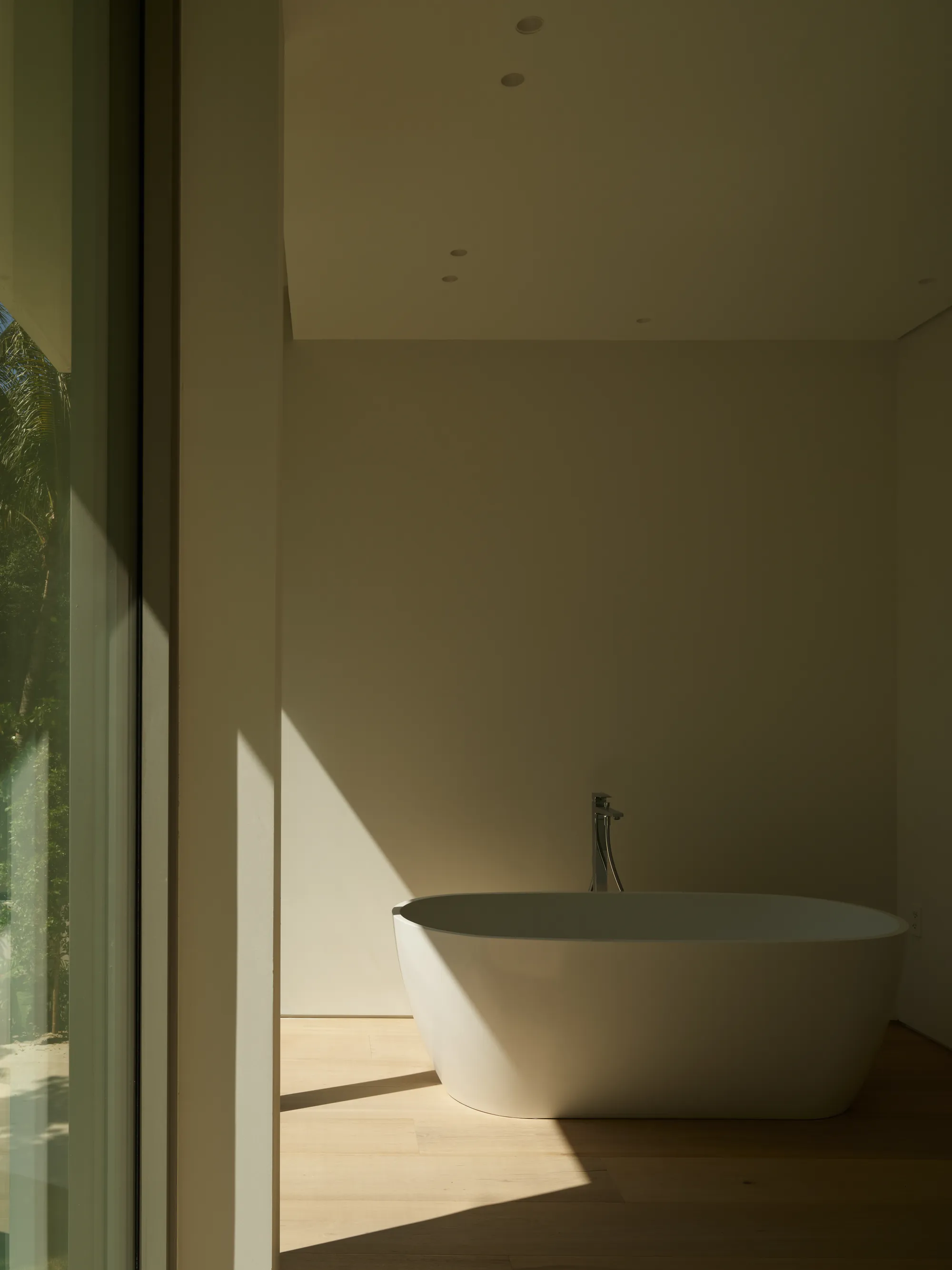
Materials · Sep 13, 2026 · 4 min
The Tub Decides the Bathroom: A Buyer's Guide
The tub is the one fixture that has to be chosen before anything else in the room. A working comparison of freestanding, built-in, stone-carved and soaking tubs, and what each one decides for the space around it.
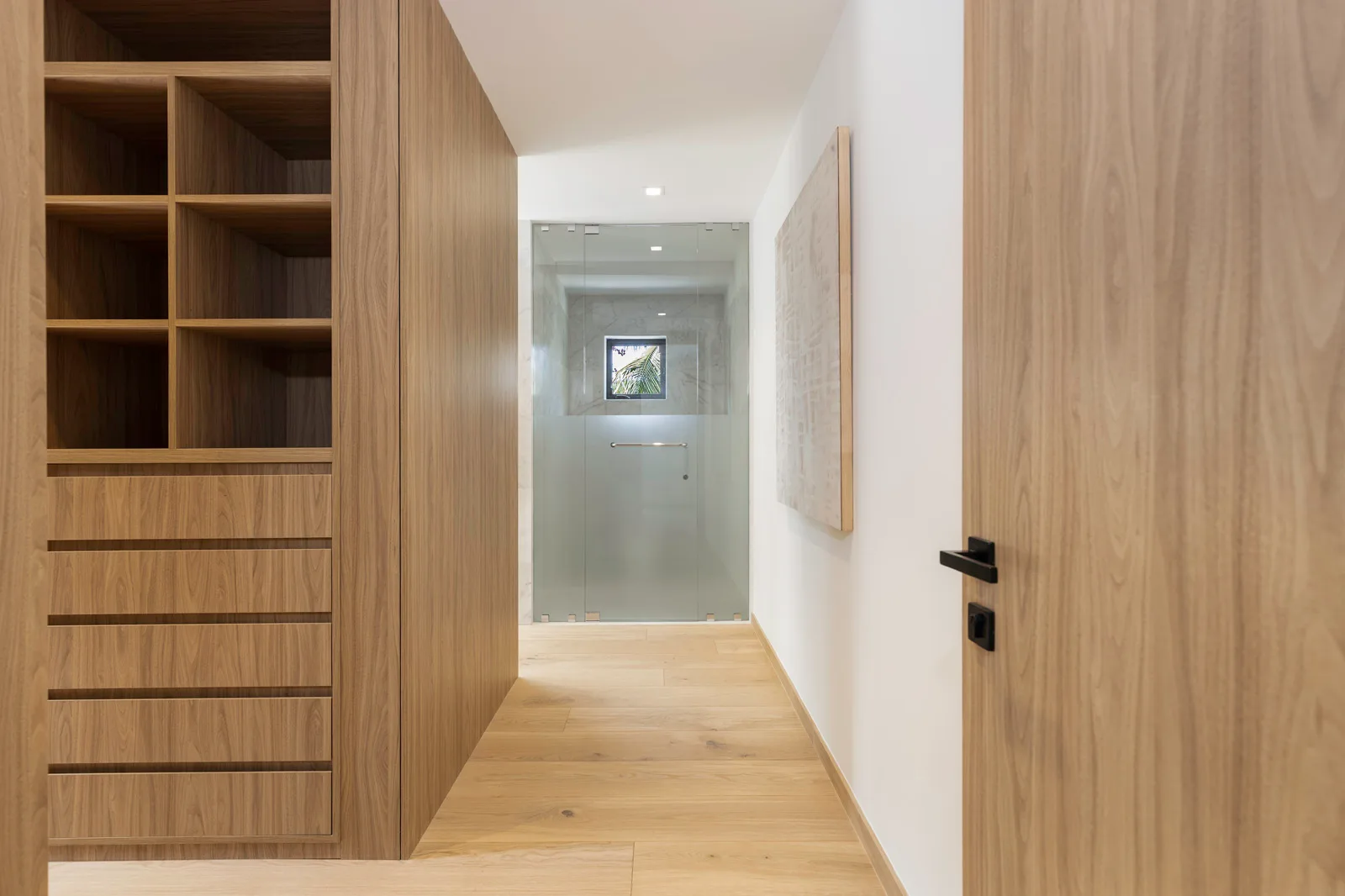
Materials · Sep 1, 2026 · 5 min
One Timber, Fourteen Rooms: White Oak and Walnut Joinery
Why timber is the one finish that improves with use, and how a single white oak and walnut joinery program runs through closets, panelling, doors and ceilings in one Luxom home.