Your rug should not match your furniture. It should talk to it.
The generic advice says find one matching thread. What that actually looks like in a finished Luxom room is a planned material conversation, not a matched fabric swatch.
Luxom Studio · LUXOM Developments
· 5 min read · Last reviewed
Key takeaways
- A rug and the furniture on it do not need to match. They need one uniting thread, color, material, finish or tone, that lets them read as a considered pairing instead of an accident.
- Guides that rank for this question describe the rule in the abstract, using fabric pattern and stock photography. None of them show it applied to a real, finished room built on a material program.
- At Luxom, the uniting thread is usually a material decision made before a single piece of furniture is bought: one timber species, one stone, one plaster.
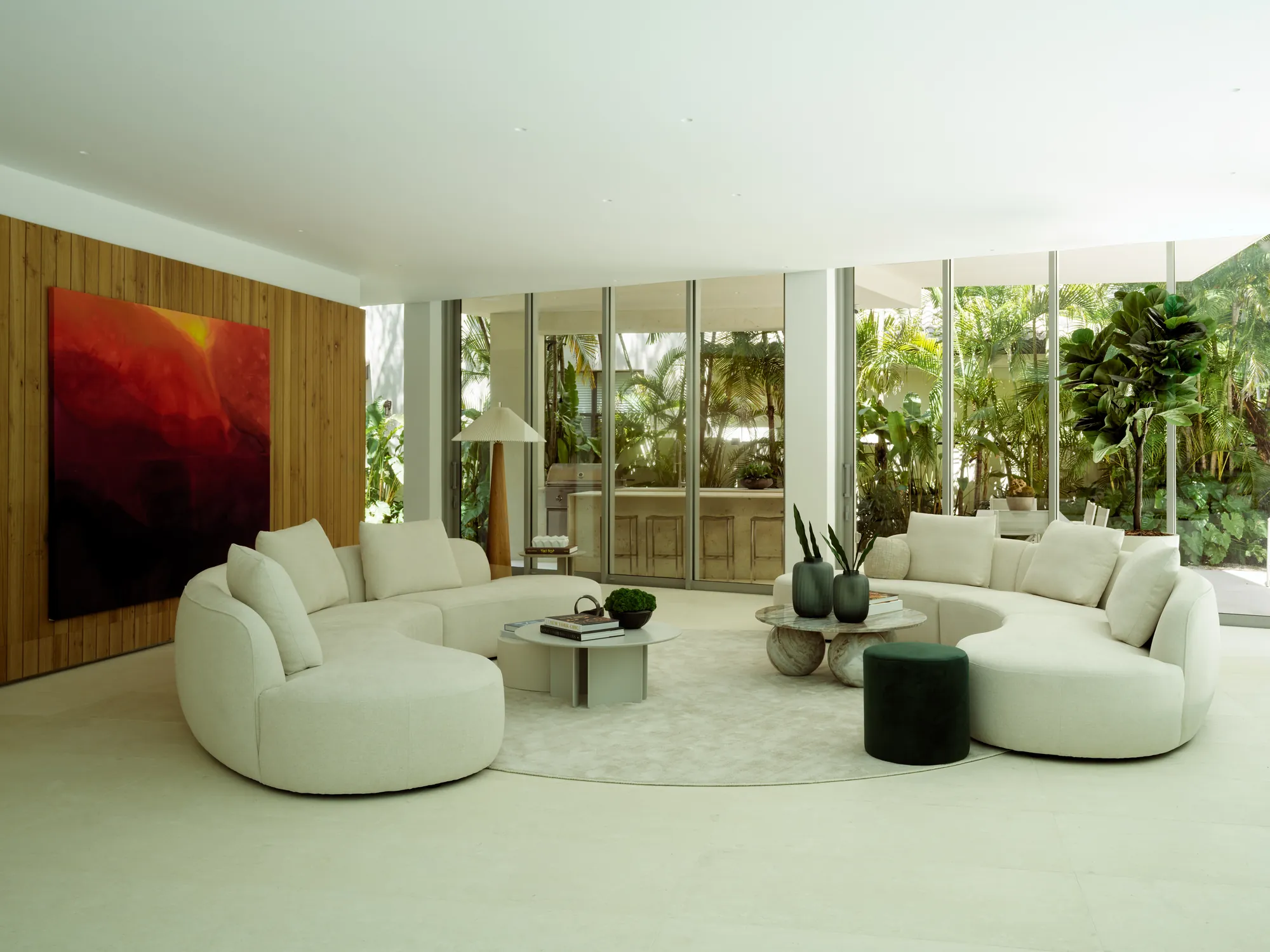
- In the finished Onaway living room, a rug sits under curved cream sofas and stone coffee tables against a wood paneled wall, with one bold painting on purpose left out of the palette.
- The same logic runs through Luxom's white oak and walnut joinery and its book matched marble bathrooms: a single material rule set before the room is furnished.
From the reel
We posted a reel about this: your rug and furniture should not match, they should talk to each other. Six combinations we keep coming back to when we design and finish a home, we said, and asked people to comment COMBO for the rest. This is the principle behind that reel, and what it actually looks like once it is built into a real, finished room rather than described in thirty seconds.
Why matching a rug and furniture exactly reads as decorated, not designed
The most common guides on this question, tested against thousands of real living rooms, agree on one thing: a rug and a sofa in the same pattern or the same fabric almost always reads flat rather than finished. The Atlanta Designer Rugs guide to pattern matching puts it as a scale rule: one pattern has to lead and the other has to follow, never the same visual weight twice in one room. That is a useful rule for fabric. It gets harder to apply once a room is not just fabric and paint but stone, timber and plaster as well, which is where most of the advice that ranks for this question stops.
The uniting thread rule: color, material or tone has to connect pieces that do not match
Homezone Furniture's guide to mixing and matching states the broader version of the same rule: pieces that do not match still need one uniting thread, whether that is a color scheme, a material, a finish or a mood. Most of the examples used to illustrate that rule are generic, a lamp here, a chair there, tied together by a paint color. In a finished house the uniting thread is rarely paint. It is usually a single material decision made before any furniture is bought at all, the same discipline behind warm minimalism: oak, plaster, stone and wool chosen as one palette, not assembled piece by piece.
Warm timber against cool stone: white oak and walnut joinery paired with marble and plaster
Two material programs make this concrete. A single white oak and walnut joinery program can run through closets, wall panelling, doors and ceilings in one home, the species and the finish decided once and repeated everywhere rather than picked separately for each room. Against that warm timber, book matched marble sets a cooler, harder counterpoint, planned bathroom by bathroom so the mirrored stone seam is drawn before the mirror or the window position is even fixed. Neither material is chosen to match the other. They are chosen to hold their own tone while sitting in the same finished house, which is what lets a rug placed later in the process read as connected rather than accidental.
Pull quote
Your rug and furniture should not match. They should talk to each other, the way a rug reads next to a room where a timber and stone program already runs through the joinery, the tables and the walls.
A real, finished room built this way: the Onaway living room's rug, curved cream sofa, stone tables, wood paneling and a bold painting
The clearest built example of this rule is the Onaway living room in Coconut Grove. A large area rug goes down first, and everything after it answers to it: curved cream sofas sized to sit on the rug rather than define it, stone coffee tables and a cone floor lamp layered around the seating once it is fixed, and a wood paneled wall behind all of it. None of those pieces match each other in color or pattern. What connects them is tone and material, cream against stone against warm wood, the same uniting thread logic described above, just built instead of decorated, and the same honest, aged material sensibility behind wabi-sabi interior design. The one deliberately unmatched note in the room is a large abstract painting in red and orange, placed last, once the rest of the room already worked without it.
How to apply the rule at home without a design team
Two moves carry most of the way here. First, pick the material or tone that is going to run through the room, a wood species, a stone, a plaster color, before shopping for the rug or the sofa, the same order Edward Martin's guide recommends when deciding whether a rug should echo the sofa or the walls instead. Second, test the pairing the way a built material palette gets tested, against a physical sample in the room's actual light, not a screenshot. Our moodboard guide walks through exactly that process, and it works as well for a rug next to a fabric swatch and a stone sample as it does for paint.
That is the six combinations from the reel in one sentence: not six colors that match, six material conversations planned before the furniture was bought. If you want to see how that plays out in a room built for your own space, get in touch with Luxom and we will walk you through it.
The same uniting thread logic applies inside a single material: see how to mix wood tones for the lead-wood and undertone rules that decide the timber side of a room before a rug ever goes down.
The same material-first logic decides what pairs with a navy sofa specifically; see navy sofa styling ideas for that decision applied to one sofa color.
Pull quote
Your rug and furniture should not match. They should talk to each other, the way a rug reads next to a room where a timber and stone program already runs through the joinery, the tables and the walls.
Filed under
Questions about rug and furniture combos
01Should a rug match the sofa or the rest of the furniture?
Not exactly, and not by accident either. A rug-and-sofa pairing works best when each piece plays a different role in scale or pattern rather than repeating the same visual weight, which is why a rug and a sofa in the identical print or the identical fabric tends to read flat rather than finished, as the Atlanta Designer Rugs guide to pattern matching lays out in detail. In a real, delivered room the pairing is planned the other way around: the rug and the furniture are chosen to talk to each other through one shared material or tone, not to copy each other. The finished Onaway living room, covered below, is a working example of that logic, built out in full in our walkthrough of that room.
02What is the 'uniting thread' rule for furniture that does not match?
Furniture that is deliberately mixed rather than bought as a matched set still needs at least one uniting thread, a color scheme, a material, a finish or a mood, to read as designed rather than accumulated, a rule Homezone Furniture's guide to mixing and matching states plainly. In a Luxom room that thread is almost never a paint color. It is a material decision, the same warm oak and stone palette described in warm minimalism, planned before the rug or the sofa is chosen.
03Should a rug match the sofa or the wall instead?
Both are legitimate, deliberate choices rather than a fixed rule. A rug can echo the sofa for a cohesive, calm story, or it can coordinate with the walls instead so the furniture stands out through contrast, as Edward Martin's guide on the question explains. What matters more than which option is picked is that it is picked on purpose, the way an aged, honest material palette is chosen on purpose in wabi-sabi interior design rather than left to chance.
04What material combinations does Luxom actually build a room around?
Two of the clearest examples are a single white oak and walnut joinery program run through closets, panelling, doors and ceilings in one home, and book matched marble planned bathroom by bathroom so the seam is set before the mirror or window position. Both are decided as one material rule before a single piece of furniture is bought, which is the same order the Onaway living room was furnished in.
05How do I test a rug and furniture combination before I commit to it?
The same way a material palette gets tested before it is built into a room: against physical samples, in the actual light of the space, rather than on a screen. Our moodboard guide covers how to run that test, and it applies just as well to a rug next to a sofa fabric and a stone sample as it does to paint and plaster.
Explore the portfolio
Projects to see


Talk to the studio
If this belongs in your home, our studio will draw the plan.
Initial conversation, 30 minutes. We listen to the brief and respond with a scoped proposal within five working days. You can also read the services page for typical timelines and fees.
Written by Luxom Studio · LUXOM Developments
The design and development studio behind LUXOM residences in Coconut Grove, Miami
Keep reading
From the journal
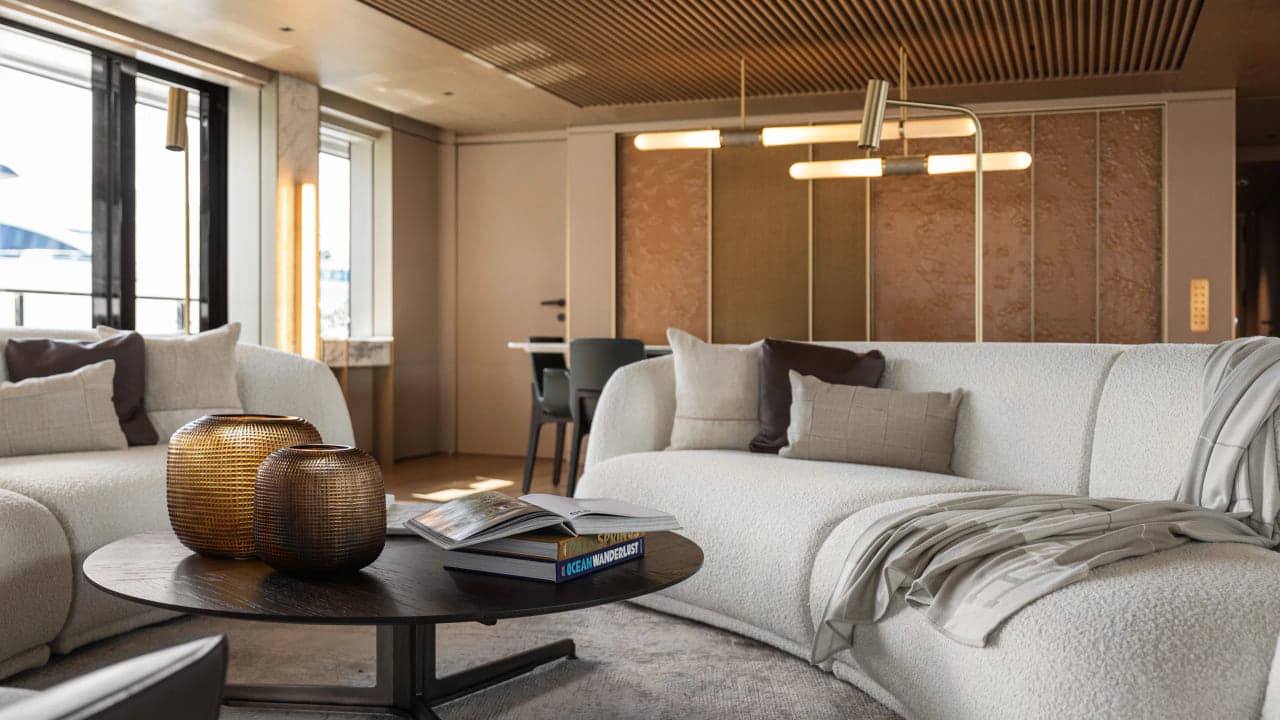
Interiors · Oct 2, 2026 · 4 min
Navy Sofa Styling Ideas: Material Before Color
Every guide hands you five or six color schemes to choose between. The decision that actually matters is the stone, wood and metal already built into the room, chosen before the sofa.

Interiors · Oct 2, 2026 · 7 min
Interior Designer Miami FL: How to Vet One Before You Hire
Miami's interior designer listings sort firms by budget, style and awards. None of them show who decides the wall, the window height or the zoning limit before a single finish gets chosen. Here is how to look past the directory.
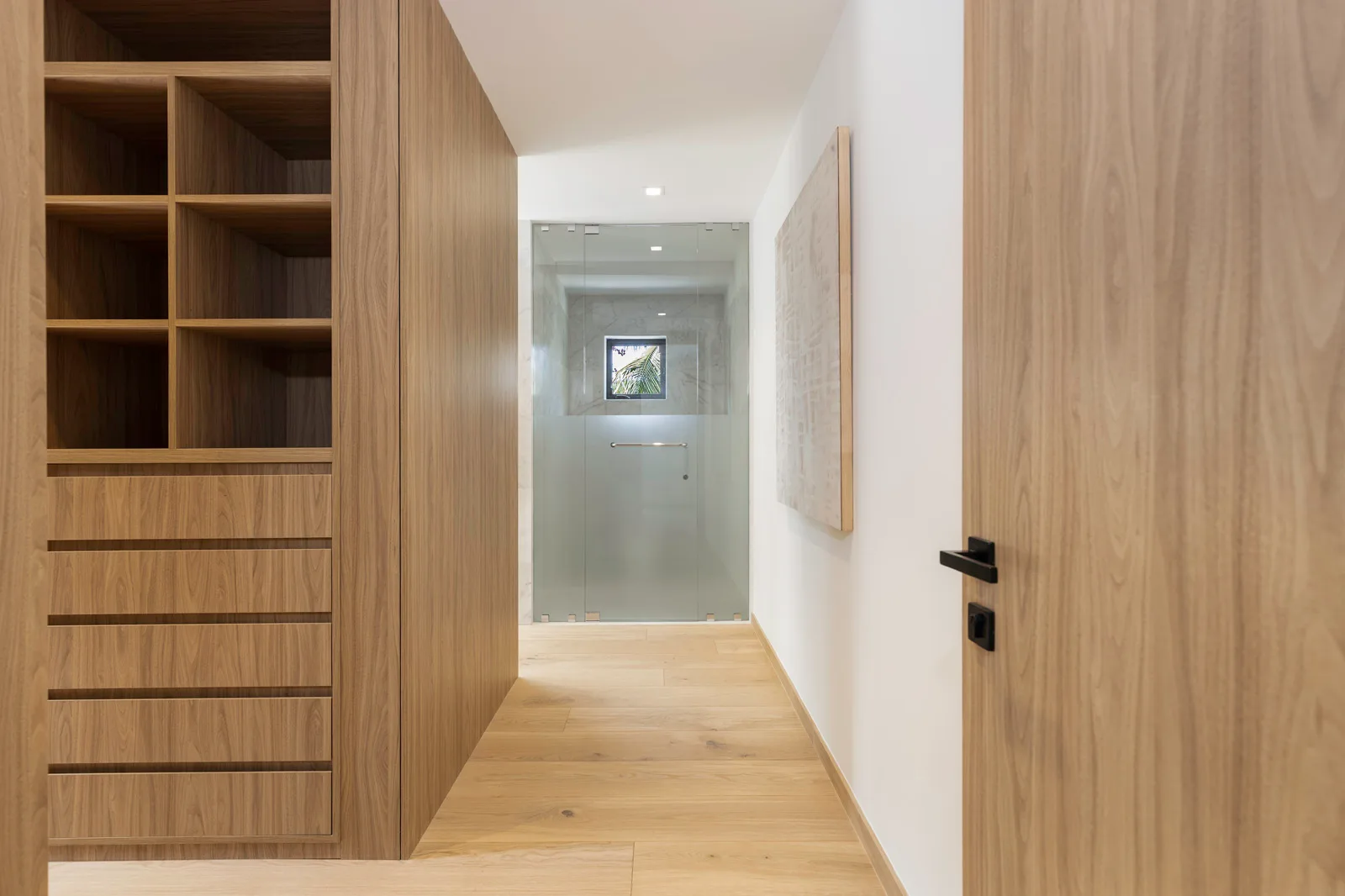
Interiors · Sep 13, 2026 · 5 min
Three Rules for Mixing Wood Tones Without Getting It Wrong
Never let every wood match, pick one lead wood, and watch the undertone. Two or three tones is enough, and here is what that looks like built into a real Luxom hallway.