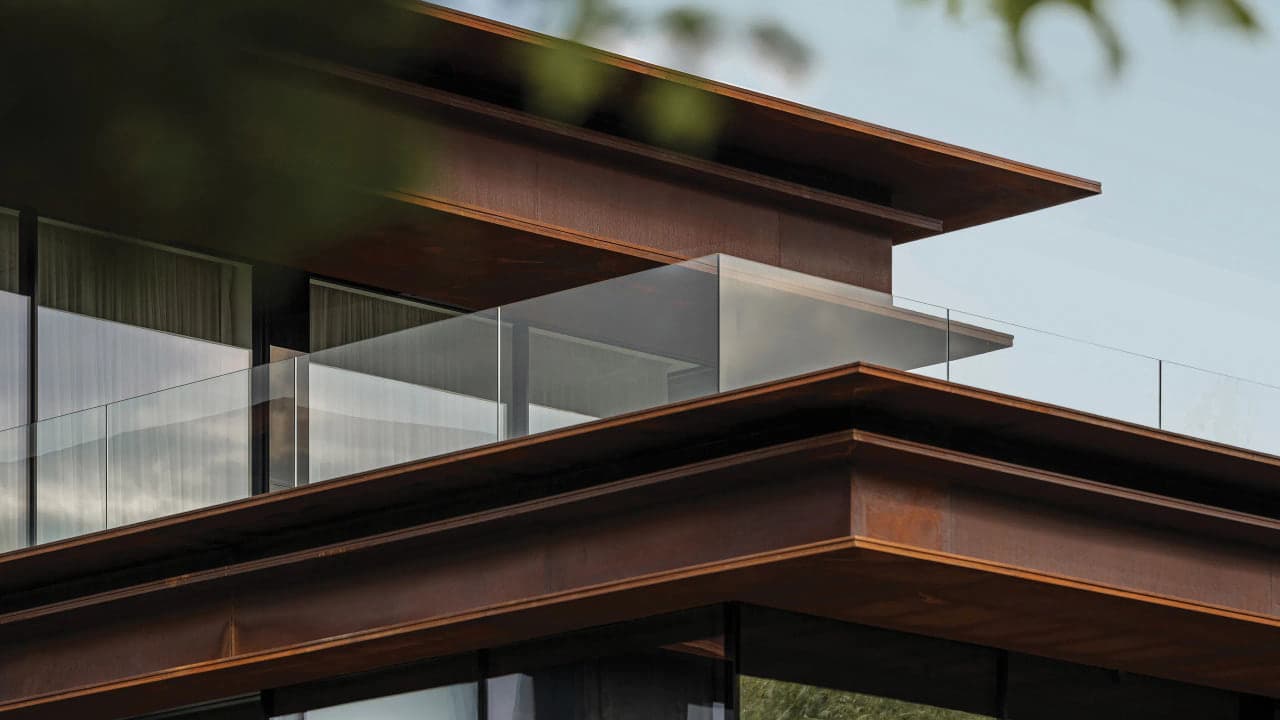
What Makes Architecture Read as Luxury, Not Just Expensive
Luxury in architecture is not square footage or finish cost. It is proportion, sequence and material honesty decided before a single finish is chosen.
Luxom Studio · LUXOM Developments
· 4 min read · Last reviewed
Key takeaways
- Luxury in architecture is not a spec sheet. Square footage, ceiling height and finish cost describe a budget, not whether a building reads as luxury.
- Proportion is the load bearing criteria. A room, facade or roofline has to be sized against the elements around it, not against a target square footage.
- Sequence matters as much as any single room. How compression, release and sightlines are ordered from one space to the next decides whether scale registers at all.
- Material honesty means a surface reads as what it actually is. A stone veneer trying to read as solid stone undercuts the same authenticity buyers are paying for.
- Shorthand rules like the 3-5-7 rule or the Three C's of architecture are useful starting checklists, not a substitute for deciding proportion and sequence at the plan stage.
- All of this gets decided with the structural drawings, before finishes are picked. Trying to add luxury after the shell is framed only dresses up a room that was never sequenced.
Editor's note
Search "luxury architecture" and most results sell it as a mood board, a plan catalog sorted by square footage, or a firm's marketing copy. None of them answer the actual question: what, specifically, makes a finished building read as luxury rather than merely expensive. The answer is not a finish level. It is proportion, sequence and material honesty, decided together, before a single finish is chosen.
Why proportion carries more weight than square footage
A house can have a large footprint, high ceilings and expensive materials and still read as bulky rather than luxurious. That happens when proportion is treated as an afterthought instead of the first decision. Proportion means every room, facade and roofline is sized against the elements around it, a window against a wall, a ceiling height against a room's footprint, a roofline against the mass beneath it, rather than against a target square footage number. A proportion system that is off reads as noise no matter how much was spent on the materials layered on top of it. This is the same principle behind why a big house is not a luxury home: scale without proportion just measures as size.
How sequence turns proportion into a finished building
Proportion decides how a single room or facade reads. Sequence decides how the whole building reads, because almost nothing in a house is experienced in isolation. A hallway that compresses before a room releases, a sightline that resolves on something worth seeing instead of competing with three other focal points, a material that carries from one space into the next without an abrupt swap. All of that is sequence, and it is the part of the so called Three C's of architecture, concept, context and construction, that tends to get skipped once a design brief becomes a set of construction drawings. Luxom applied this same discipline to a single move, the entrance, in what makes an entrance read as grand, not just big, and the same logic extends to a whole house.
Pull quote
Luxury in architecture is not a finish level. It is proportion, sequence and material honesty, decided before a single finish is chosen.
Why material honesty decides whether a surface reads as luxury
A material reads as luxury when it is what it claims to be. Solid stone, solid wood and real plaster carry weight, texture and small imperfections that a laminate or a veneer imitating the same look cannot fully reproduce, and most people register that difference even if they cannot name it. Material honesty also means restraint: carrying one or two materials consistently through a space reads as considered, while stacking five different finishes in a single room to signal spending reads as busy. This is a smaller scale version of the same discipline covered in the 3-5-7 styling rule, which groups objects for visual balance but does not address whether the room's underlying materials were chosen with the same discipline.
Why shorthand rules are a starting point, not a finished framework
Rules like the seven principles of design, the Three C's of architecture and the 3-5-7 styling guideline are useful because they are memorable and give a starting checklist to someone with no design background. Where they fall short is that they describe categories of good design without ranking which decisions have to happen first, and in what order. Proportion and sequence have to be locked in at the structural drawing stage, alongside decisions like the facade materials and the floor plan itself, exactly as covered in building a custom luxury home in Miami, start to finish. Applying a styling checklist to a room after the shell is framed cannot rebuild a sequence that was never designed in the first place, a point Luxom has made previously about material honesty and restraint as a design discipline rather than a decorating trend.
What to ask for when briefing an architect on a luxury project
Instead of asking for luxury finishes or a target square footage, ask three sharper questions: how is the proportion of each major room and facade being checked against the elements around it, what is the sequence of compression and release from the entrance through the rest of the house, and which two or three materials are being carried consistently rather than swapped room to room. Those three answers, decided at the structural stage, do more to make a finished building read as luxury than any finish schedule. Luxom's own framing of this exact question, that luxury is a function of proportion and sequence rather than size, is laid out in a recent Coconut Grove project reel.
A sculptural, structure led version of the same three questions, applied to a Miami landmark rather than a Coconut Grove house, is worked through in what Zaha Hadid's Miami tower teaches about structure as form.
Once proportion and sequence are settled, the next question is which named style the lot itself can actually carry, covered in how Luxom chooses an architectural style for a Coconut Grove lot.
Pull quote
Luxury in architecture is not a finish level. It is proportion, sequence and material honesty, decided before a single finish is chosen.
Filed under
Questions about what makes architecture read as luxury
01What is luxury in architecture?
Luxury in architecture is the result of proportion, sequence and material honesty working together, not a finish level or a price tag, as covered in why proportion carries more weight than square footage. A house can have expensive stone, tall ceilings and a large footprint and still read as bulky if those elements were not sized against each other first. The same discipline is behind why a big house is not a luxury home, which makes the same argument about scale without proportion.
02What are the 7 principles of design in architecture?
Most lists of the seven principles cover balance, proportion, rhythm, emphasis, contrast, unity and scale, and they are a reasonable checklist for a student or a first pass on a plan. Where they fall short, covered in why checklists like this are a starting point, not a finished framework, is that they describe categories without ranking them. On a real project, proportion and scale have to be decided first, at the structural stage, the way an entrance sequence gets locked in with the structural drawings, or the other five principles end up applied to a shell that was never sized correctly to begin with.
03What are the Three C's of architecture?
The Three C's usually refer to concept, context and construction, the idea being that a design needs a clear idea, a real relationship to its site, and a construction method capable of delivering both, a framework close to the general definition of architecture itself. It is a fair summary at the level of a design brief, discussed further in how sequence ties concept to construction on an actual build. What it leaves out is sequence: the order in which spaces are experienced, which is what actually determines whether a concept that reads well in a rendering also reads as luxury once someone walks through the finished building.
04What is the 3-5-7 rule in interior design?
The 3-5-7 rule is a decorating guideline for grouping objects, usually in odd numbered sets of three, five or seven items, on a shelf or a vignette, because odd groupings tend to read as more visually balanced than even ones. It is a real and useful rule for styling a single surface, but it operates at the scale of decor, not architecture, which is the gap covered in why material honesty matters more than any single styling rule. No amount of correctly grouped objects on a console table changes whether the room itself was sequenced and proportioned correctly in the first place.
05Can a small house read as more luxurious than a large one?
Yes. A smaller house with correct proportion, a resolved sequence from one room to the next, and a small number of honest materials carried consistently will typically read as more luxurious than a larger house with mismatched scale and a long list of finishes competing for attention. This is the same case made in why a big house is not a luxury home: extra square footage without proportion and sequence reads as size, not luxury.
Explore the portfolio
Projects to see


Talk to the studio
If this belongs in your home, our studio will draw the plan.
Initial conversation, 30 minutes. We listen to the brief and respond with a scoped proposal within five working days. You can also read the services page for typical timelines and fees.
Written by Luxom Studio · LUXOM Developments
The design and development studio behind LUXOM residences in Coconut Grove, Miami
Keep reading
From the journal
Architecture · Sep 24, 2026 · 5 min
What Makes an Entrance Read as Grand, Not Just Big
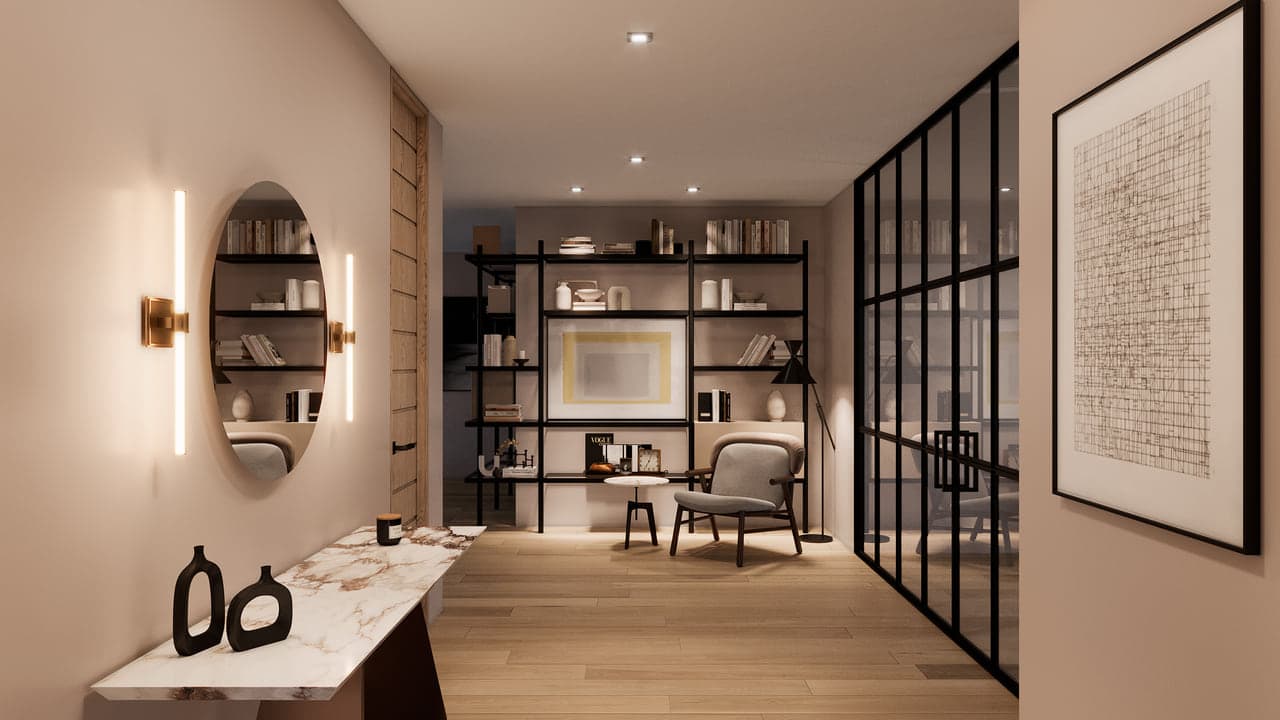
A tall foyer is not a grand entrance. It takes a sequence: compression before release, one sightline that resolves, and a single material carried through. Here is how that gets decided.
Architecture · Sep 25, 2026 · 5 min
A Big House Is Not a Luxury Home
Square footage is the easiest number to sell and the least reliable sign of quality. What actually separates a big house from a luxury home, and how a developer decides which is which.
Philosophy · Aug 7, 2026 · 6 min
What Mies van der Rohe Taught Luxom About Building
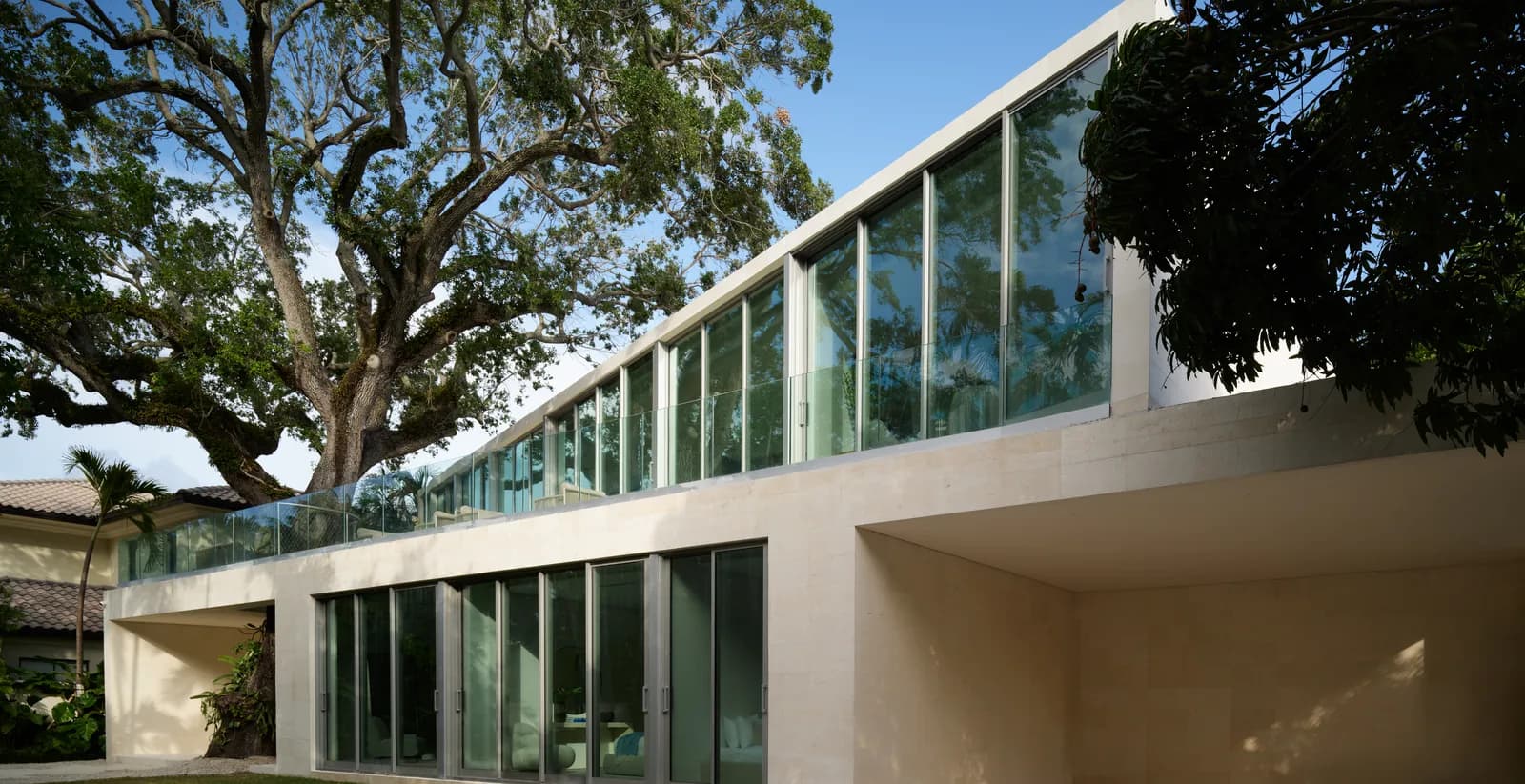
A line long attributed to Mies van der Rohe, that architecture starts when two bricks are carefully put together, reads as history. At Luxom it reads as a daily standard for materials, proportion and restraint.